
Bionetic
Loading
Bionetic
Loading
Bionetic
Loading
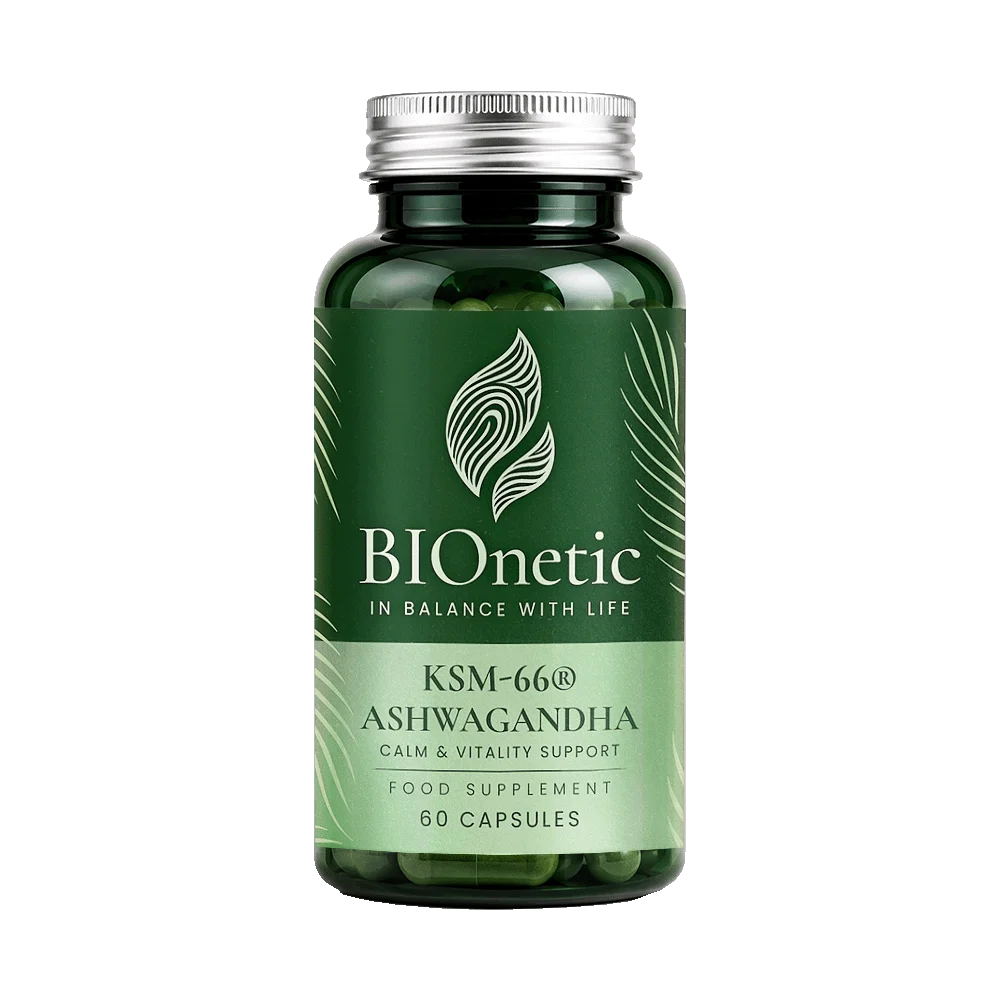
Two ashwagandha capsules of the same weight can hold quite different material. The difference comes down to which part of the plant went in, how it was drawn out, and what the maker will promise about its strength.
Ashwagandha is a short, grey-green shrub of the nightshade family, growing across the dry country of India, the Middle East and parts of North Africa. It has been farmed in India a very long time, and both the root and the leaves get used — but not interchangeably. The two are different material, and a good deal of the variation between the ashwagandha products on a shelf comes down to which one went in.
The compounds makers measure are the withanolides. Dozens of them have been described, and they aren't spread evenly through the plant: the leaves generally hold more than the root. That's worth knowing, because an extract that includes leaf can show a bigger headline percentage while being a different preparation altogether.
KSM-66 is made from the root alone. It's drawn out with water, without alcohol or chemical solvents, and it's made to a set 5% withanolides. Each of those three is a specification rather than a phrase someone in marketing chose: root-only rules out leaf, water-based describes how it's made, and the 5% fixes the strength so that one batch matches the next.
That last part is the whole point of standardising. Raw plant material varies with the variety, the soil, the altitude, the season and how old the root was when it was lifted. An extract made to a set figure is adjusted at the factory so every batch meets the same specification — which is why a named extract with a defined process behind it tells you more than a bare milligram number.
Bionetic's ashwagandha is KSM-66 root extract at 5% withanolides, 600 mg per capsule, with the specification printed on the product page. Food supplements should not be used as a substitute for a varied and balanced diet and a healthy lifestyle.
