
Bionetic
Loading
Bionetic
Loading
Bionetic
Loading
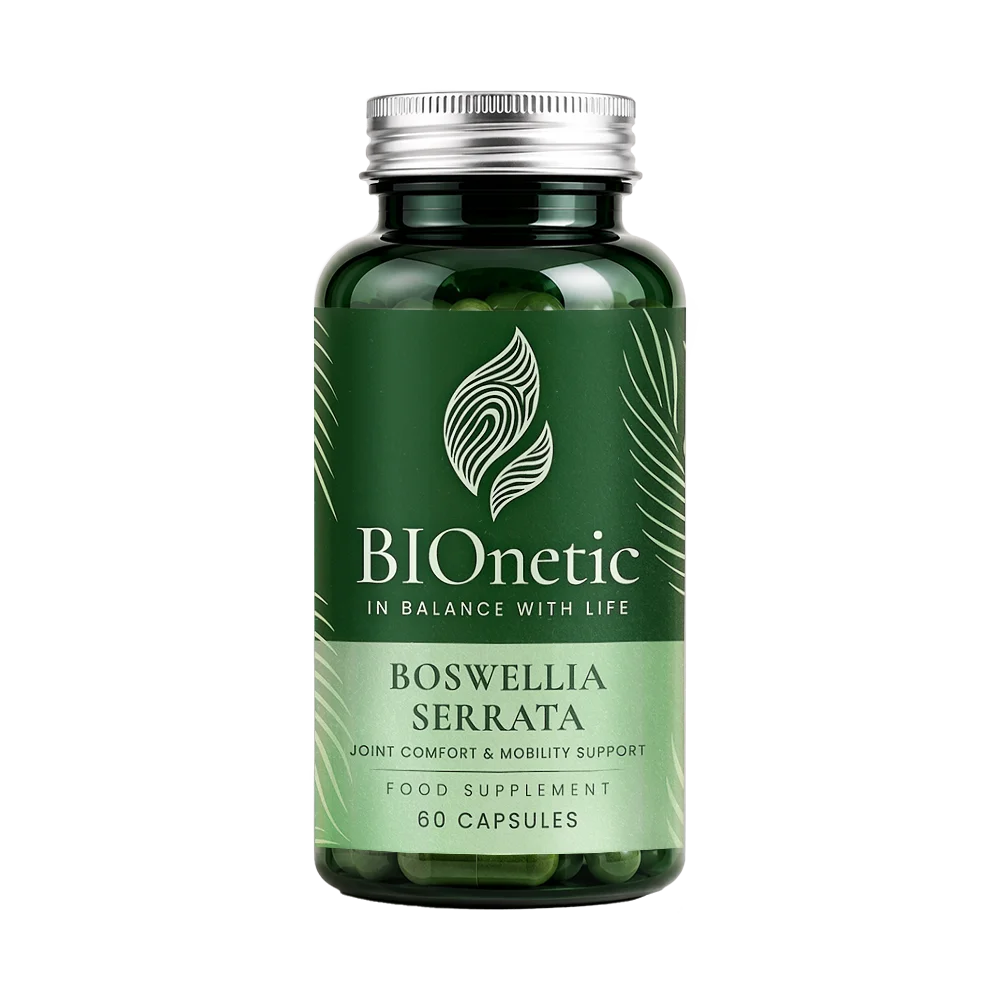
Non-steroidal anti-inflammatory drugs are the default for joint inflammation and pain — but they come with a substantial burden of gastrointestinal and cardiovascular side effects. Boswellia serrata offers a mechanistically distinct, clinically validated alternative that works without those risks.
Chronic inflammation is the common thread running through most age-related conditions — from osteoarthritis and inflammatory bowel disease to cardiovascular disease and metabolic syndrome. The standard pharmaceutical approach is cyclooxygenase (COX) enzyme inhibition via NSAIDs like ibuprofen or naproxen. These drugs work by blocking prostaglandin synthesis, but their long-term use erodes the gastric mucosal lining, elevates cardiovascular risk, and in some cases worsens the very joint damage they are meant to relieve by inhibiting cartilage-protective prostaglandins.
Boswellia serrata resin operates through an entirely different mechanism. Its primary active compound, 3-O-acetyl-11-keto-beta-boswellic acid (AKBA), is a potent and highly selective inhibitor of 5-lipoxygenase (5-LOX) — the enzyme responsible for converting arachidonic acid into leukotrienes, a class of pro-inflammatory signalling molecules distinct from prostaglandins. By targeting the leukotriene pathway rather than the COX pathway, Boswellia achieves anti-inflammatory effects without irritating the gastric lining, without cardiovascular risk, and without disrupting the joint-protective prostaglandins that NSAIDs eliminate.
Bionetic's Boswellia Serrata extract is standardised to a minimum of 65% total boswellic acids with a defined AKBA content — the threshold shown in clinical literature to produce meaningful biological effects. Standardisation matters here because raw Boswellia resin has highly variable AKBA content depending on harvest region, season, and extraction method. An unstandardised extract may contain as little as 1–2% AKBA, well below the threshold required for clinical efficacy.
The clinical evidence for standardised Boswellia is robust. A double-blind RCT published in Phytomedicine found that 333 mg of Boswellia extract three times daily significantly reduced pain, stiffness, and functional impairment in osteoarthritis of the knee within 8 weeks compared to placebo. A separate controlled study demonstrated measurable increases in knee flexion range and walking distance. Beyond joints, research has documented Boswellia's ability to support gut mucosal integrity — AKBA inhibits NF-kB activation in intestinal epithelial cells, making it an area of active clinical interest for inflammatory bowel conditions.
For people managing chronic joint discomfort, exercise-induced inflammation, or post-injury recovery, Boswellia represents a fundamentally safer long-term strategy than regular NSAID use. Its mechanisms are well understood, its tolerability profile is excellent across all major clinical trials, and its effects on both leukotrienes and NF-kB signalling address multiple inflammatory pathways simultaneously. Used consistently, it allows the body's own anti-inflammatory systems to restore balance rather than simply masking pain.
More from the blog
