
Bionetic
Loading
Bionetic
Loading
Bionetic
Loading
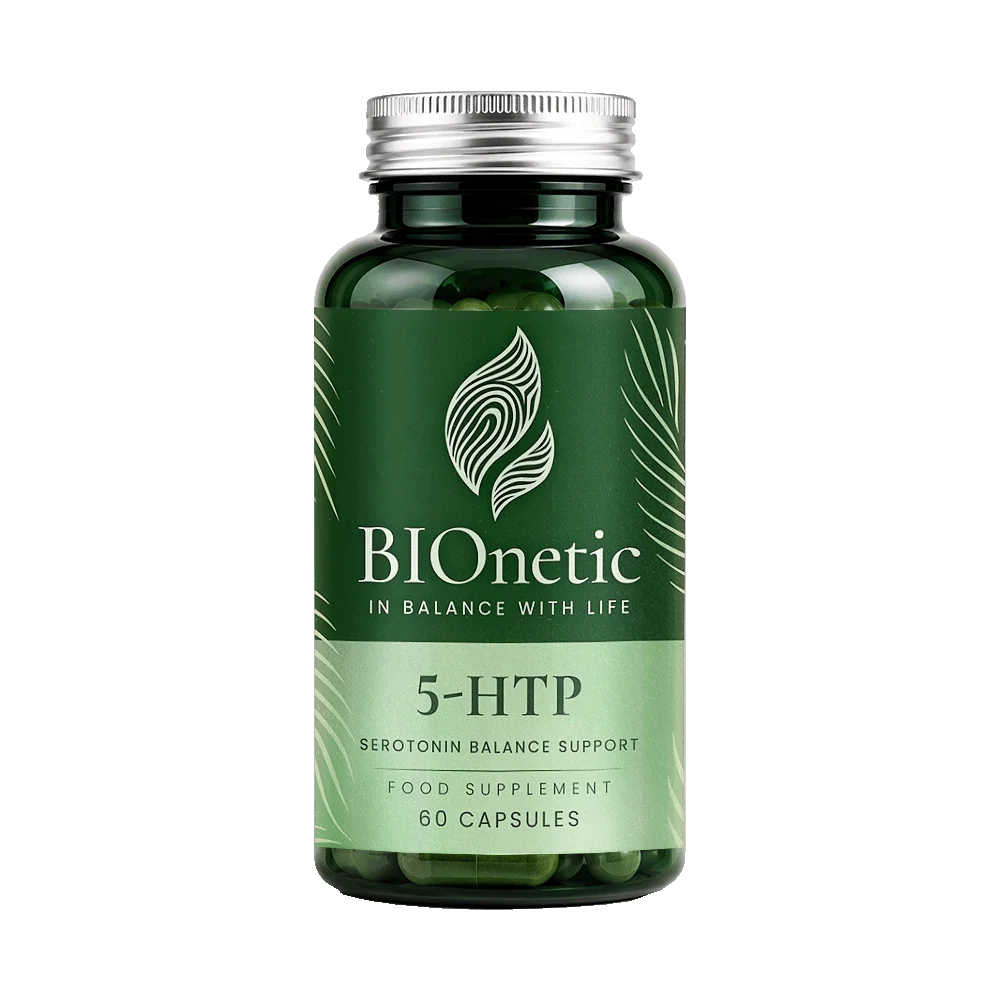
5-HTP is the direct biochemical precursor to serotonin — the neurotransmitter governing mood regulation, appetite, pain sensitivity, and sleep initiation. Understanding how it works reveals why it outperforms tryptophan supplementation and why it has attracted serious clinical interest for mood and sleep disorders.
Serotonin (5-hydroxytryptamine, or 5-HT) is one of the most functionally diverse neurotransmitters in the human nervous system. Its influence extends well beyond mood: it regulates intestinal motility (approximately 90% of the body's serotonin is in the gut), modulates pain perception through descending inhibitory pathways in the spinal cord, controls appetite satiety via hypothalamic circuits, and serves as the precursor for melatonin synthesis in the pineal gland. When serotonin production is insufficient — whether due to nutritional deficits, chronic stress, poor sleep, or genetic factors — the downstream consequences are far-reaching.
The serotonin synthesis pathway begins with the essential amino acid tryptophan, which the enzyme tryptophan hydroxylase (TPH) converts to 5-hydroxytryptophan (5-HTP). Aromatic L-amino acid decarboxylase (AAAD) then rapidly converts 5-HTP to serotonin. The rate-limiting step is TPH — and this enzyme is subject to significant inhibition by stress hormones, inflammation, and competition from other large neutral amino acids for transport across the blood-brain barrier. This is why tryptophan supplementation often produces modest and inconsistent serotonergic effects.
5-HTP bypasses this bottleneck entirely. Because it is already downstream of the rate-limiting TPH step, it crosses the blood-brain barrier efficiently via a dedicated transport system and is converted to serotonin with high fidelity by AAAD, which is abundantly expressed in neurons. Clinical studies consistently show that oral 5-HTP raises central serotonin levels more reliably than tryptophan at equivalent doses. Bionetic 5-HTP is derived from Griffonia simplicifolia seeds — the richest natural source — with a standardised 98% 5-HTP content per capsule.
The clinical evidence for 5-HTP spans three major application areas. For mood, a rigorous Swiss double-blind trial found 5-HTP at 300 mg/day as effective as fluvoxamine (an SSRI) for mild to moderate depression, with fewer side effects. For sleep, 5-HTP's role as the proximate precursor to melatonin makes it particularly valuable for improving sleep onset — clinical data show significant reductions in time to fall asleep and improvements in sleep quality scores. For appetite regulation, 5-HTP has been shown to reduce carbohydrate cravings and total caloric intake in overweight adults by enhancing serotonergic satiety signalling in the hypothalamus.
A few practical considerations apply to 5-HTP supplementation. Taking it with vitamin B6 (especially in its active P5P form) enhances the AAAD-catalysed conversion to serotonin. Taking it 30–45 minutes before bed leverages the melatonin synthesis window and maximises sleep benefits. People currently taking SSRIs or other serotonergic medications should consult a physician before adding 5-HTP, as combined serotonergic activity requires careful management. Used appropriately, 5-HTP is one of the most mechanistically precise nutritional tools available for supporting mood and sleep — not because it forces a pharmacological state, but because it restores the substrate from which the brain builds its own chemistry.
More from the blog
